Your cat deserves more than a basic shelf screwed to the wall. Avant-garde DIY cat wall ideas for indoor cats turn your home into an interactive, art-worthy playground that keeps your cat active and your space looking sharp. These builds are bold, functional, and surprisingly doable on a weekend.
Whether you have one curious kitten or a household of climbers, a custom cat wall gives your feline a world above the floor — and gives you a conversation piece worth showing off.
- Key Takeaway 1: Avant-garde cat walls combine art and function — they look great and keep cats mentally stimulated.
- Key Takeaway 2: You don't need professional tools. Most builds use basic supplies from hardware stores.
- Key Takeaway 3: Wall anchoring is the most critical safety step — never skip it.
- Key Takeaway 4: Mixing textures, heights, and hiding spots creates the most enriching environment.
- Key Takeaway 5: Planning your layout on paper first saves time, money, and holes in your wall.
What Makes a Cat Wall “Avant-Garde”?
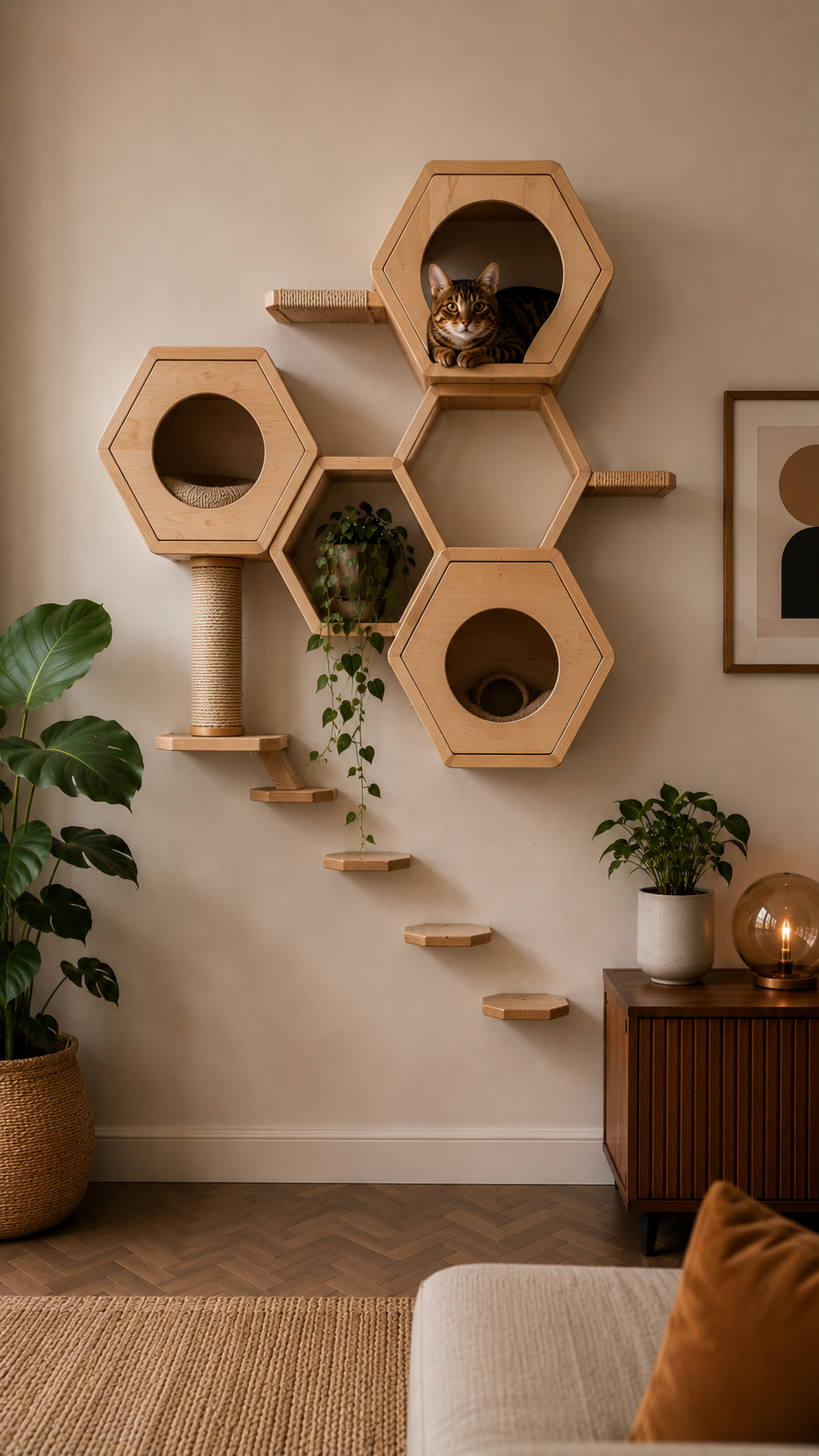
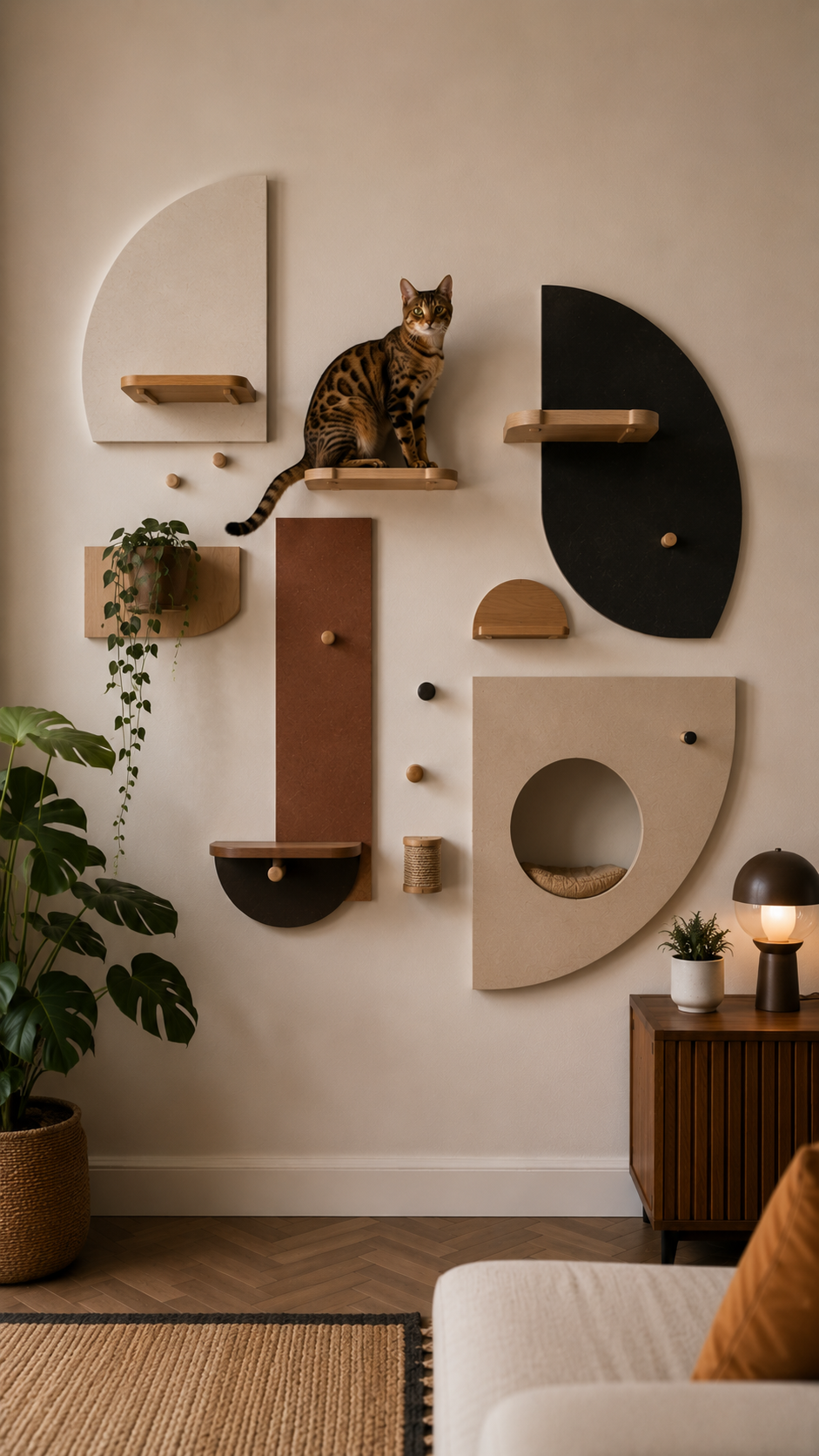
Standard cat shelves are fine. But avant-garde designs push further — they treat the wall as a full canvas. Think geometric shapes, mixed materials, hidden tunnels, and layouts that flow like a sculpture.
The goal is a cat wall that looks intentional, not like an afterthought. It should blend with your decor while giving your cat a rich, multi-level environment to explore.
Art Meets Function
The best avant-garde cat walls double as wall art. Hexagonal shelves, floating tree branches, and asymmetric platforms all create visual interest. Your cat gets enrichment, and you get a feature wall worth photographing.
Think about negative space, too. Leaving gaps between elements makes the design feel intentional rather than cluttered.
Going Beyond the Basic Shelf
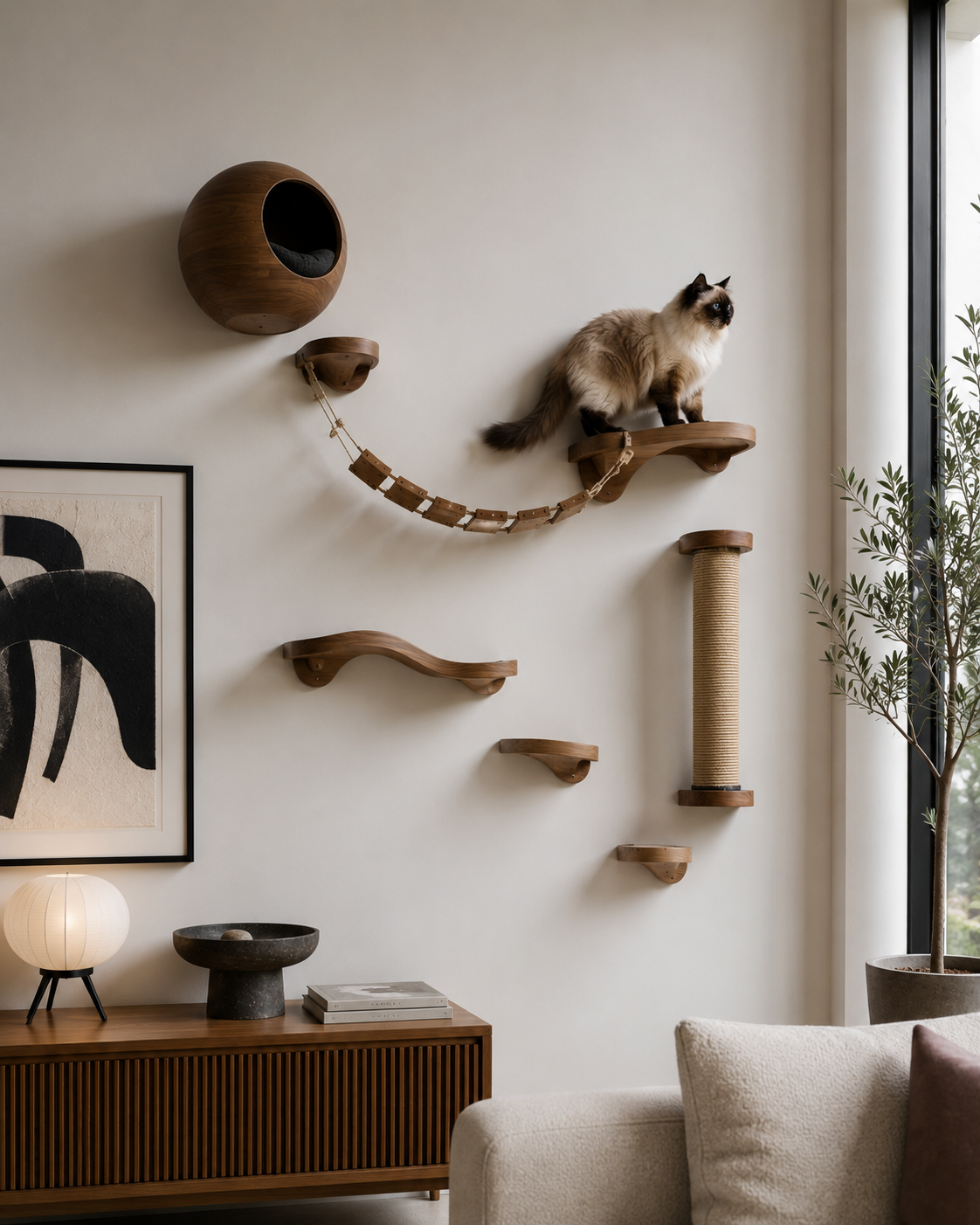
Standard rectangular shelves are the starting point — not the finish line. Avant-garde builds add tunnels, portholes, hammocks, and enclosed pods. These elements give cats options: climbing, hiding, observing, and lounging all in one system.
Cats feel safest when they can watch their environment from above. A multi-level wall with vertical variety taps directly into that instinct. You can learn more about why height matters in this Festive Felines: Cats And Christmas Trees on cat behavior and enrichment.
Matching Your Home's Style
Avant-garde doesn't mean chaotic. The design should match your existing decor — whether that's minimalist, industrial, boho, or mid-century modern. Choose wood tones, paint colors, and hardware that already exist in your room.
A cohesive look makes the cat wall feel like a designed feature, not a pet accessory bolted to the wall.
Planning Your Avant-Garde Cat Wall Layout
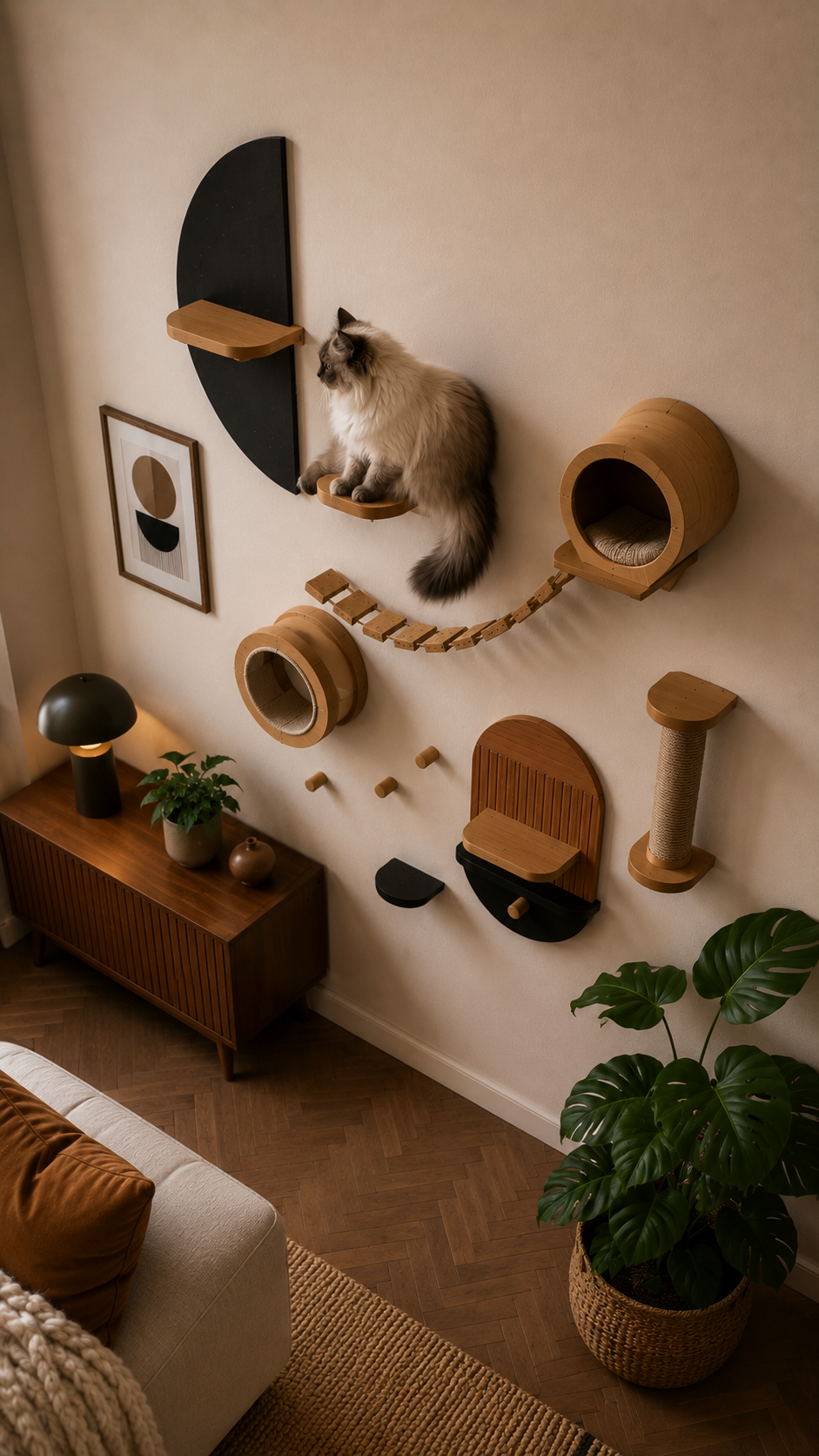
Jumping straight to building is the most common mistake. A good plan prevents wasted materials, misaligned shelves, and unhappy cats. Spend time mapping before you drill.
Sketch the Full Wall First
Draw your wall to scale on graph paper. Mark every outlet, window, and door. Then sketch where each element will go — shelves, tunnels, ramps, and resting pods.
Leave clear pathways between elements so your cat can move without jumping too far. A good rule: no more than 18 inches between horizontal steps for an average adult cat.
Plan Entry and Exit Points
Your cat needs a way onto the wall and a way down. Include a ramp, a low starting shelf, or a cat tree that connects to the wall system. Dead ends frustrate cats and can create anxiety — especially in multi-cat homes.
Plan at least two ways off the wall if your system covers a large area. Safety and confidence go together for cats navigating heights.
Account for Weight and Load
Each shelf or platform needs to support your cat's full weight, plus the impact of landing. A 12-pound cat jumping from 5 feet creates significant force. Always mount into wall studs or use heavy-duty toggle anchors rated for the load.
Check your wall type before buying hardware. Drywall over wood studs, plaster walls, and concrete all require different anchor types. This is the step most DIYers skip — don't be one of them.
Top Avant-Garde DIY Cat Wall Ideas to Try
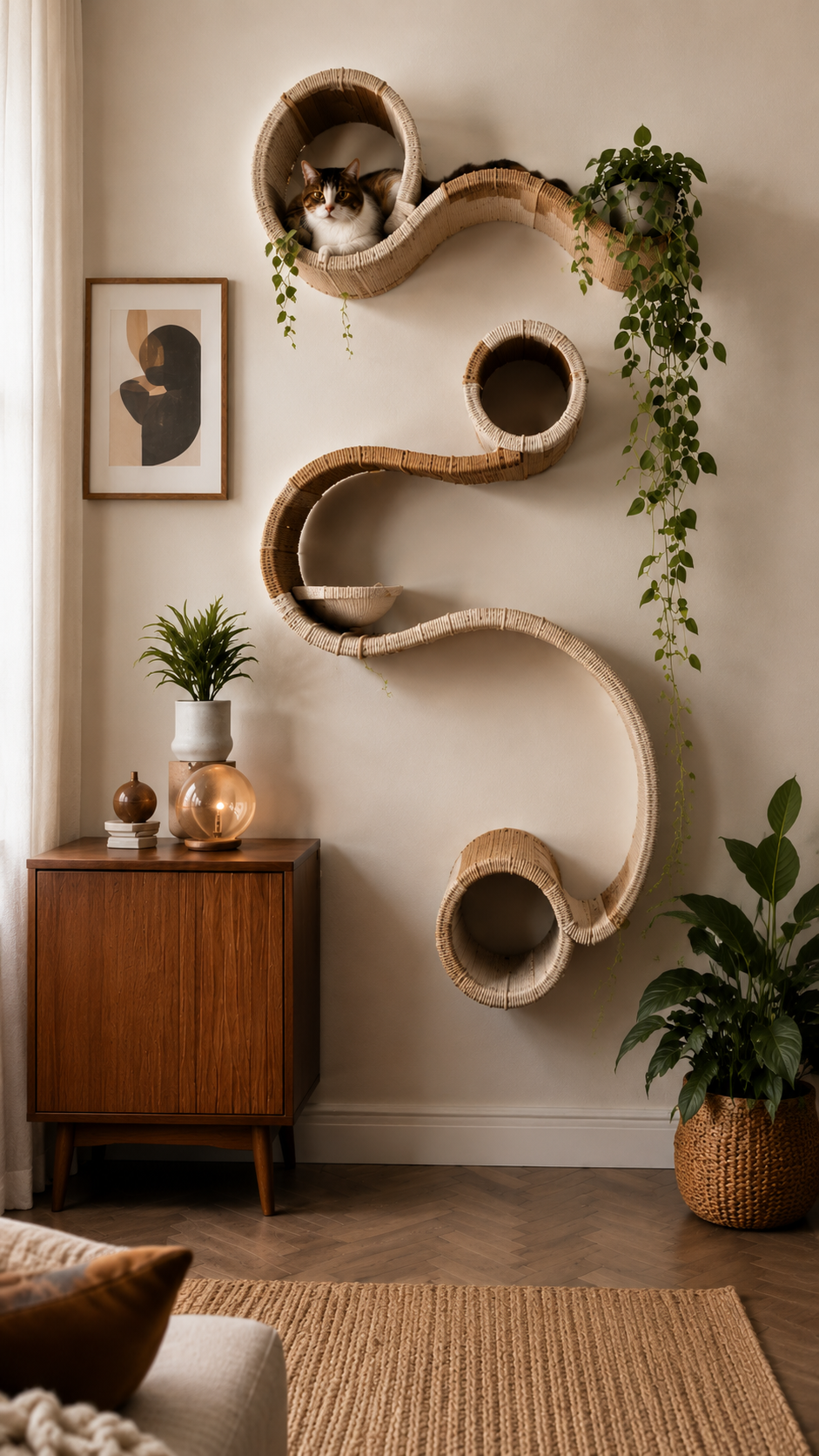
Here are the most striking, creative concepts that real cat owners have built at home. Each one can be adapted to your space, budget, and skill level.
Geometric Floating Shelves
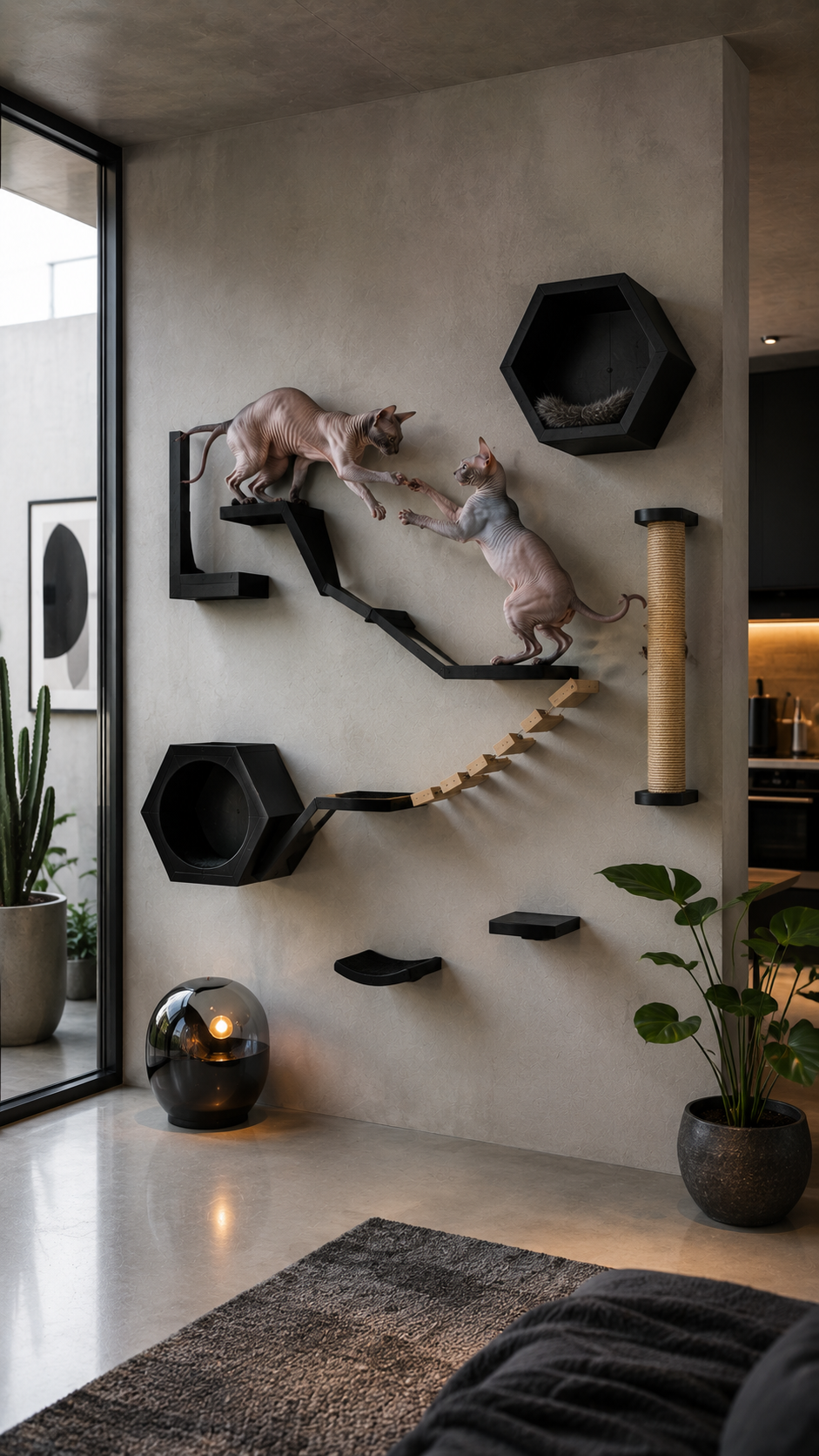
Hexagons, triangles, and diamonds replace standard rectangles for a modern, gallery-wall feel. You can cut these from plywood with a jigsaw or buy pre-cut MDF shapes from craft stores. Cover them in carpet, faux fur, or wood veneer for texture contrast.
Arrange them in a pattern that creates a climbing path — each shape should be reachable from the next. This style works especially well in minimalist or Scandinavian-style rooms.
The Indoor Forest Wall
Install real or faux branches horizontally across the wall. Mount them using flange pipe fittings or custom-drilled holes with threaded rods. Sand real branches smooth and seal them to prevent splinters and pests.
Add small platform pods at branch intersections. This design feels organic and wild — completely different from anything in a pet store. It pairs well with plant walls and botanical decor themes.
Industrial Pipe and Plank System
Black iron pipe brackets hold raw wood planks at varying heights and angles. This look suits industrial, loft-style, or rustic spaces.
The contrast between metal and wood gives the wall a strong visual structure.
Wrap some planks in sisal rope for scratching surfaces built directly into the design.
Hidden Tunnel Network
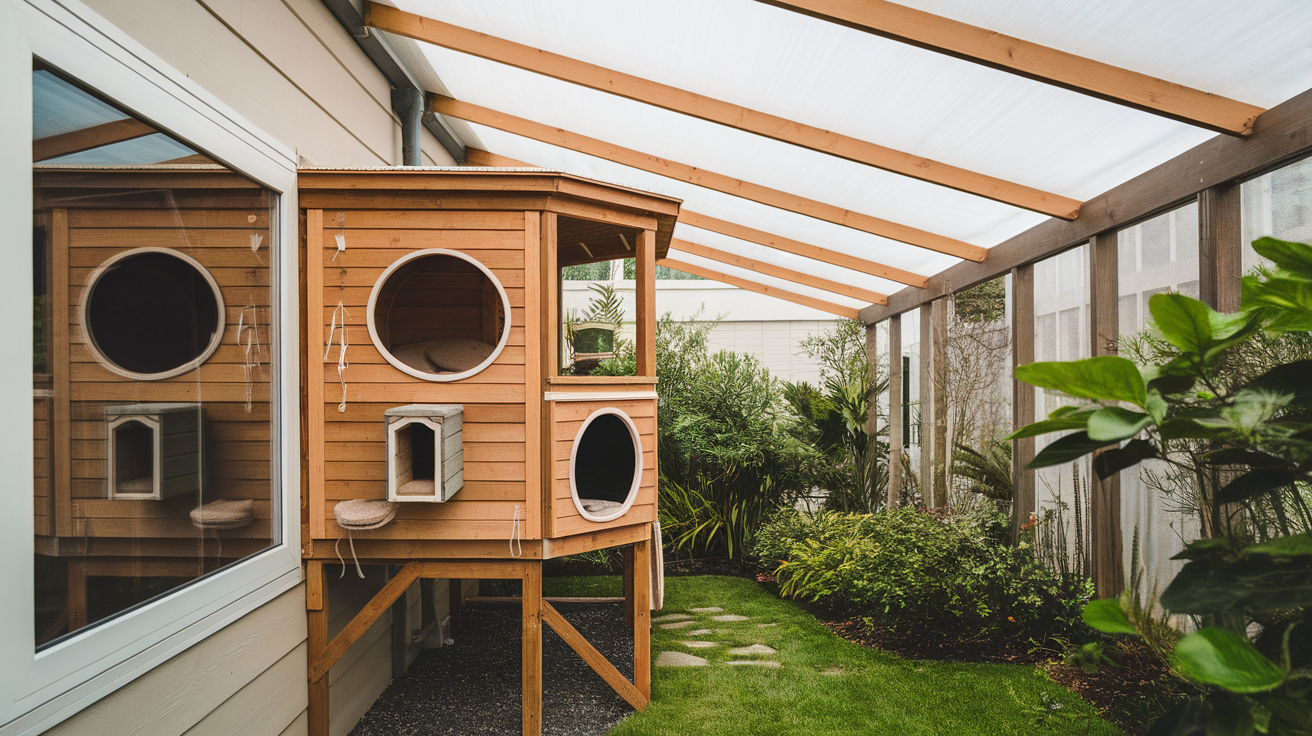
Build enclosed wooden tunnels that connect platforms at different heights. Cut circular openings — portholes — so your cat can peek through. This satisfies a cat's instinct to move through enclosed spaces, which feels safe and predatory at the same time.
Paint tunnels in bold colors or wrap them in patterned wallpaper for a statement look. The surprise of a hidden pathway makes your cat wall genuinely avant-garde.
Floating Wall Hammocks
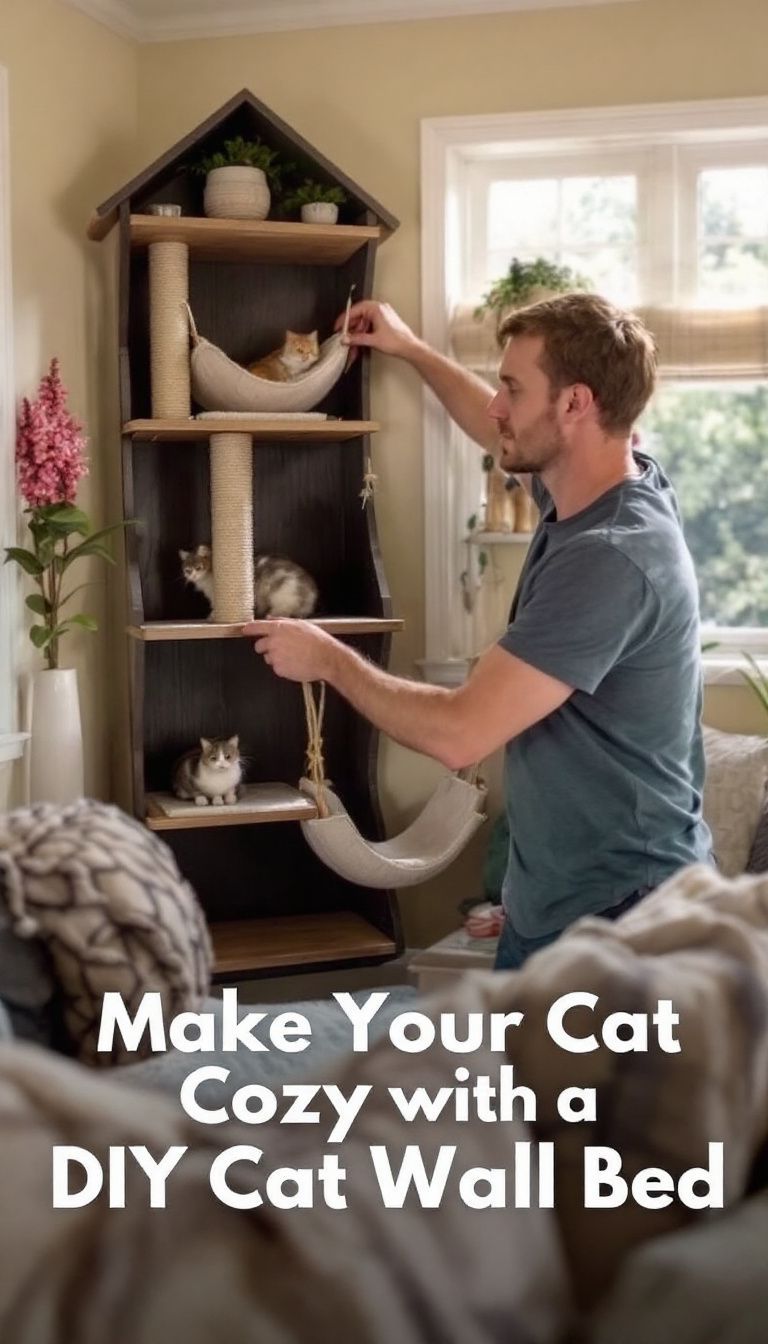
Suspend canvas or fabric hammocks between wall-mounted wooden dowels. These soft spots offer a hanging, swaying resting place that cats go crazy for. Use sturdy eye hooks and paracord rated to hold at least 50 pounds.
Hammocks add softness and movement to an otherwise rigid wall structure. They also break up the visual weight of all-wood shelves.
Materials and Tools You'll Need
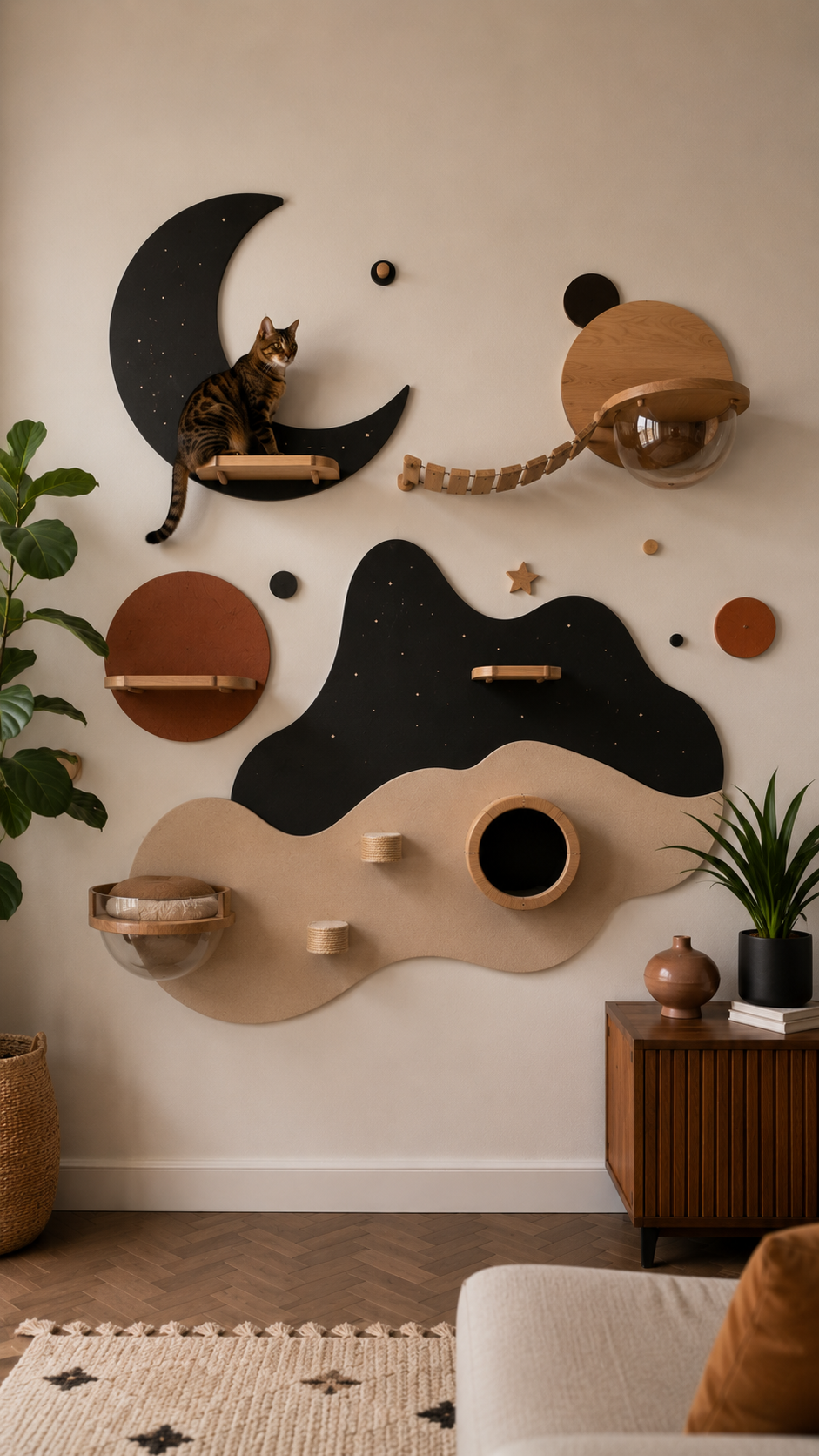
You don't need a full workshop. A basic toolkit handles most cat wall builds. Knowing what to buy before you start saves multiple hardware store trips.
Essential Building Materials
- 3/4-inch plywood or MDF — strong, affordable, and easy to cut into shapes
- Carpet remnants or sisal rope — for traction and scratch surfaces
- L-brackets and floating shelf brackets — hidden or decorative, depending on your look
- Lag screws and wall anchors — rated for your specific wall type
- Wood stain, paint, or veneer — to finish and protect the surface
- Sandpaper (120 and 220 grit) — smooth edges protect paws and prevent splinters
Tools You'll Use
- Drill and drill bit set
- Stud finder
- Level
- Jigsaw (for custom shapes)
- Measuring tape and pencil
- Staple gun (for attaching carpet or fabric)
Product Recommendations
Choosing the right supplies makes a big difference in how polished your final cat wall looks and how long it lasts. Here are some tried-and-tested products worth adding to your build list.
Look for floating shelf brackets rated for at least 50 pounds each, non-toxic wood finish products, and carpet tiles with a low pile that's easy for cats to grip without catching claws. Sisal rope should be natural fiber — not synthetic — to avoid chemical exposure during scratching sessions.
Safety First: Making Your Cat Wall Structurally Sound
A beautiful cat wall that falls is a danger to your cat and your home. Structural safety isn't optional — it's the foundation of the whole project.
Always Find Your Studs
A stud finder costs under $20 and is the most important tool you'll own for this project. Every anchor point for a shelf or bracket should go into a wall stud whenever possible. Drywall alone cannot hold the repeated impact of a jumping cat.
Mark studs with tape before drilling. Double-check with a small pilot hole if your stud finder gives inconsistent readings.
Test Every Shelf Before Your Cat Uses It
After mounting, push down hard on each shelf with both hands. Shake it. Try to wiggle it sideways. If anything moves or creaks, reinforce before letting your cat near it.
Do this test again after 30 days. Anchors can loosen as the wall settles, especially with repeated use.
Smooth Every Edge
Sharp corners and rough edges are a real hazard. Sand every cut edge until smooth to the touch. Pay extra attention to porthole openings in tunnels and the undersides of shelves where a cat might brush past.
Avoid staples or hardware on the top surface of any shelf. Cats walk, roll, and knead on these surfaces with bare paws. You can also read about how to keep your cat's paws healthy with tips from How to Build a Minecraft Cat Tree: Step-by-Step Guide for All Versions.
Keeping Your Cat Wall Fresh Over Time
Even the most stunning cat wall needs maintenance. Cats scratch, shed, and wear down surfaces over time. A little upkeep keeps the wall safe and looking great for years.
Refresh Carpet and Fabric Regularly
Carpet-covered shelves absorb odor, hair, and dander. Replace carpet tiles every 6 to 12 months, or sooner if your cat uses the wall heavily. Peel-and-stick carpet tiles make this easy — no staple gun required for refreshes.
Sisal rope can be rewound or replaced section by section. Don't wait until it's completely shredded — frayed rope can catch claws.
Inspect Anchors and Brackets Seasonally
Check every screw and bracket four times a year. Tighten anything that feels loose. Look for cracks in wood panels, especially near the mounting holes where stress concentrates.
Keep a small maintenance kit near your cat wall: spare screws, a screwdriver, and wood glue. Quick fixes prevent small problems from becoming safety issues.
Add New Elements to Keep Cats Engaged
Cats habituate to their environment. Adding a new shelf, tunnel, or hammock every few months keeps the wall exciting. You don't need to rebuild — just expand or rearrange.
Rotate resting pads and toys on the shelves seasonally. Novelty keeps cats mentally active and coming back to the wall regularly.
Frequently Asked Questions
How high should cat wall shelves be from the floor?
Start your lowest shelf about 18 to 24 inches from the floor so your cat can reach it easily from a cat tree or short ramp. The highest point can be near the ceiling — cats love elevation. The key is spacing each level no more than 18 inches apart so jumping feels comfortable and safe.
What wood is safest to use for a DIY cat wall?
Plywood and MDF are both safe when properly sanded and sealed with a non-toxic, water-based finish. Avoid pressure-treated lumber — it contains chemicals that are harmful to cats. Real hardwoods like pine, oak, and poplar are all excellent choices and hold screws well.
How do I stop my cat wall shelves from wobbling?
Wobbling usually means the bracket is not anchored into a stud. Use a stud finder to locate solid wood inside the wall and re-drill into the stud. If studs aren't in the right position, use heavy-duty toggle bolts rated for at least 50 pounds per anchor point.
Can I build a cat wall in an apartment?
Yes, but check your lease first. Some landlords allow small shelf holes patched on move-out. Use the minimum number of anchor points and patch holes with spackle when you leave. Alternatively, some cat wall systems use floor-to-ceiling tension poles that require no drilling at all.
How do I get my cat to use the new cat wall?
Place treats and catnip on each shelf when you first install it. Use a feather toy to lure your cat up the levels. Some cats need a few days to warm up to a new structure — don't force it. Once they've explored it on their own terms, most cats use their wall regularly.
Building an avant-garde DIY cat wall is one of the most rewarding home projects a cat owner can take on. You get a stunning feature wall, and your cat gets an enriching, stimulating environment tailored exactly to them. Start with a solid plan, build safely, and don't be afraid to make it bold — your cat and your home both deserve it.
This website contains affiliate links. As an Amazon Associate and an affiliate for other programs, I earn from qualifying purchases. Clicking on an affiliate link may result in a commission being paid to me at no additional cost to you.




Leave a Reply