Building a cat tree in Minecraft can be tricky, especially when you want your virtual pets to have a cozy spot to rest. Like many players, I spent hours testing different designs until I found that cats in Minecraft love climbing structures taller than two blocks.
This simple guide will show you how to build the perfect cat tree that works in all game versions. Soon your feline friends will be purring with joy in their new virtual hangout spot.
Trust me – watching them climb and play makes all the building effort worth it.
Key Takeaways
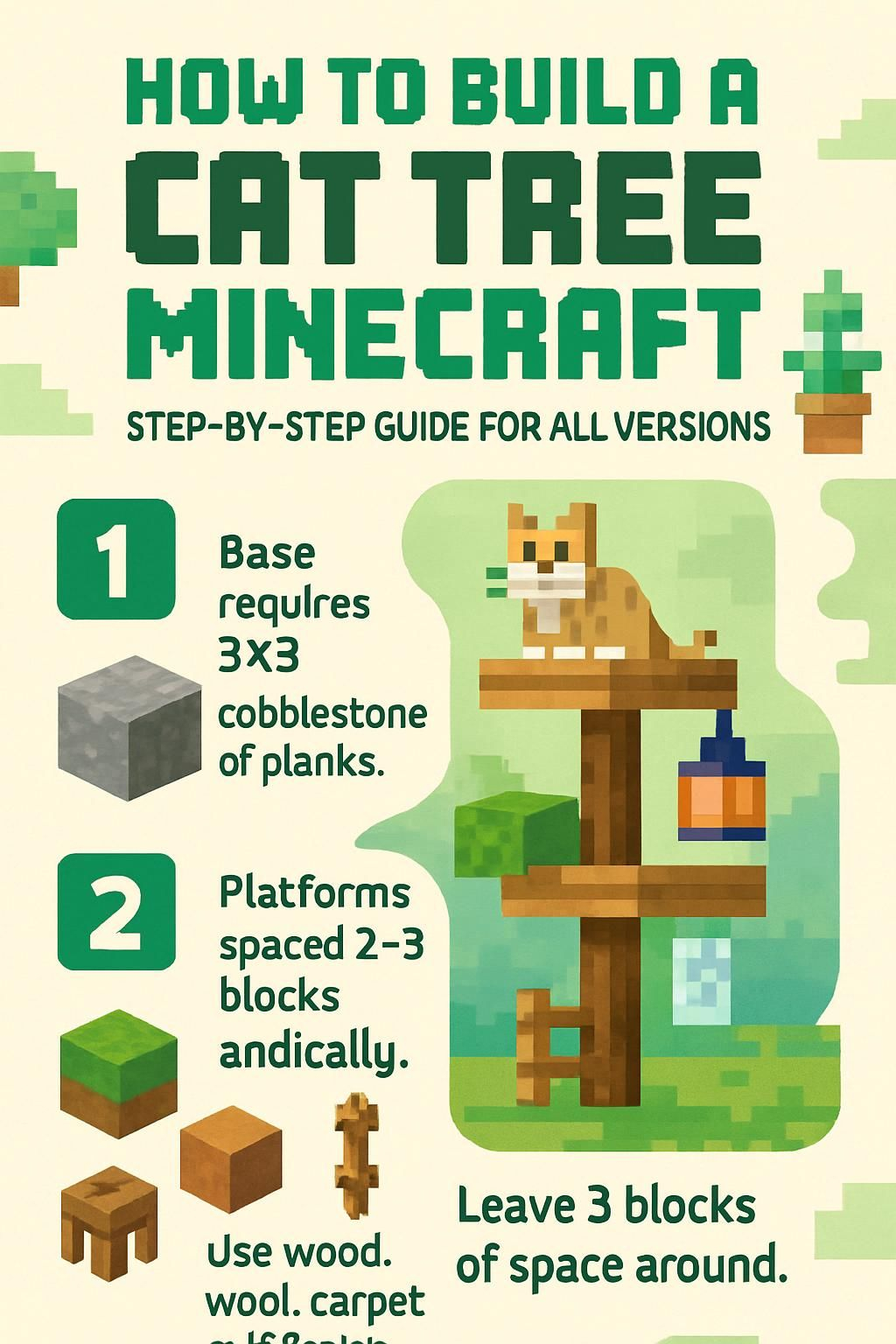
- A basic Minecraft cat tree needs a 3×3 block base made of cobblestone, wooden planks, or stone slabs for stability.
- Cats need platforms spaced 2-3 blocks apart vertically, with each platform being at least 2×2 blocks wide for comfortable movement.
- The best materials combine wooden blocks (oak, spruce, or birch) with wool blocks and carpet for comfort, while fence posts work great as climbing spots.
- Adding decorative items like lanterns, flower pots, and glass panes makes the cat tree more appealing, while proper lighting keeps mobs away at night.
- Leave three blocks of space between the cat tree and other structures to let cats move freely, and ensure the highest platform has two blocks of air space above it.
Materials Needed to Build a Cat Tree in Minecraft
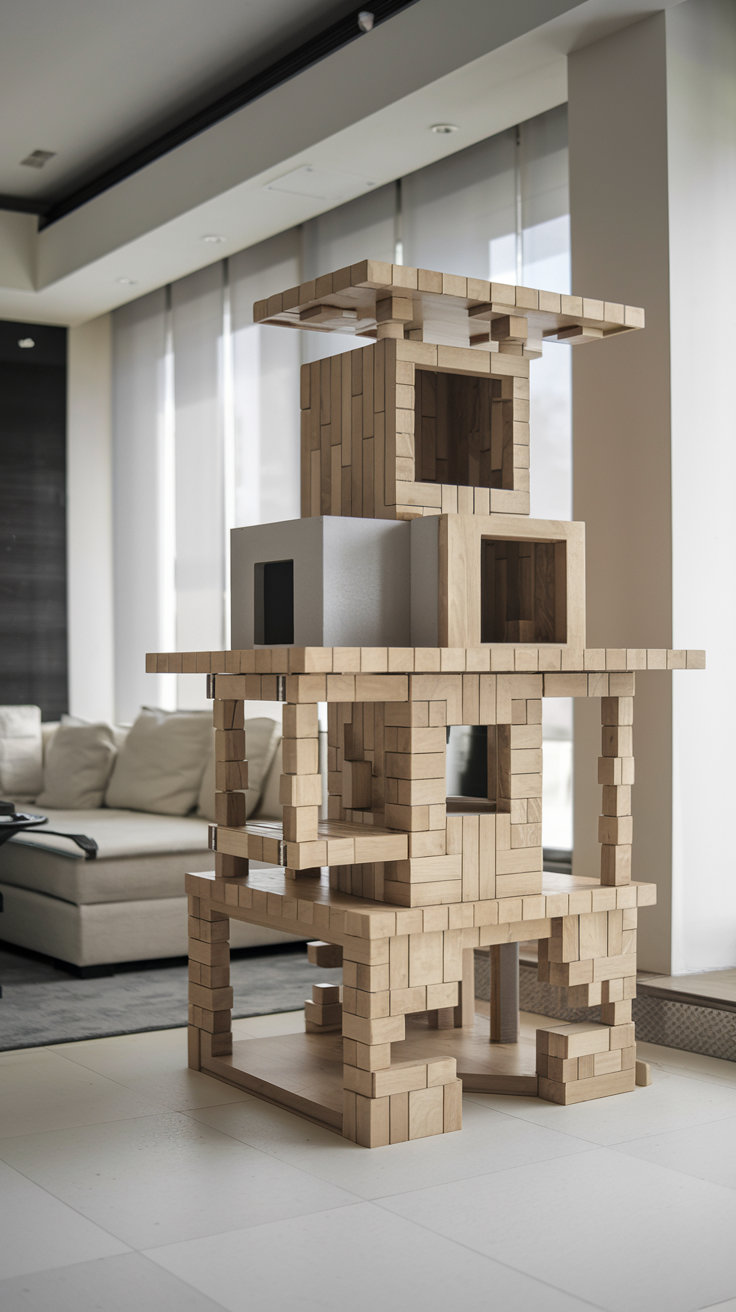
I'll show you the exact blocks and items you need to create a perfect cat tree in Minecraft. My favorite materials combine wood blocks with wool blocks, which give your cats both comfort and style.
What Types of Blocks Work Best for a Cat Tree?
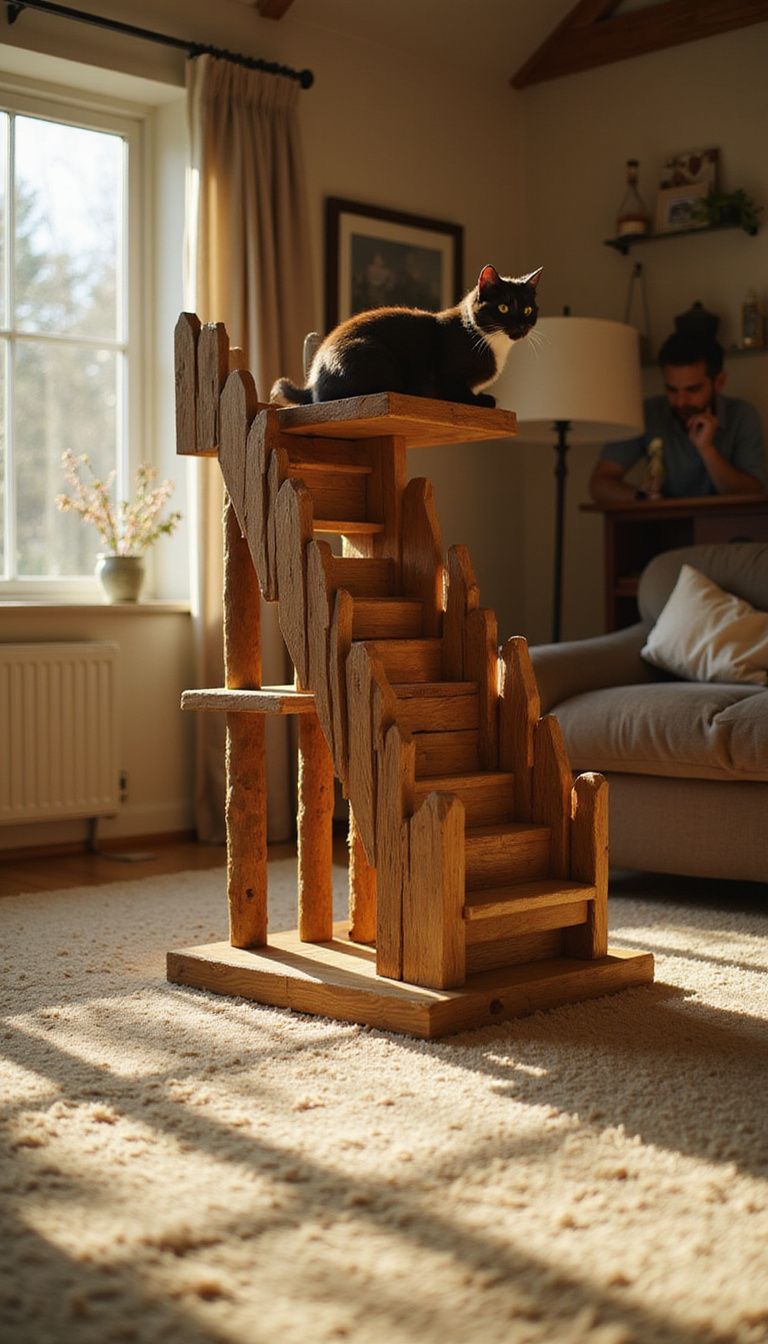
Wooden blocks stand out as the top choice for building a Minecraft cat tree. Oak planks, spruce logs, and birch stairs create a natural, cozy look that matches most house designs. My cats love to climb on dark oak fence posts mixed with wool blocks, which add both style and comfort to their play space.
The perfect cat tree combines function with feline fun, just like in real life!
The best foundation starts with solid blocks like stone or concrete for stability. Carpet blocks work great for the platforms where cats rest, while fence posts make excellent scratching areas.
Glass panes or iron bars can create see-through sections that give the structure an airy feel without losing its sturdiness. Slabs and stairs help create different levels and paths for cats to explore, making the tree more exciting for virtual pets to use.
Which Decorative Items Enhance the Cat Tree's Style?
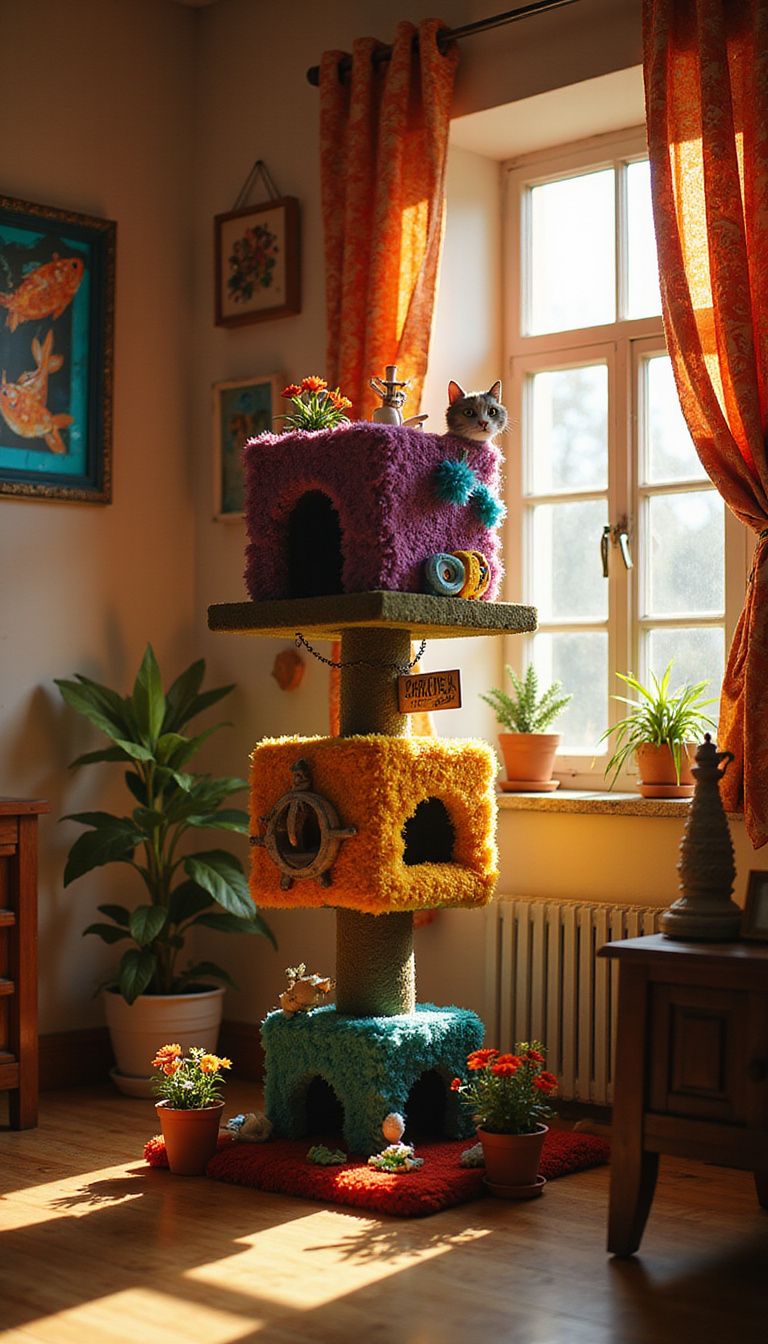
Now that I've picked the right blocks for my cat tree base, I'll share my favorite decorative items to make it pop. Carpet blocks in bright colors add comfort and style to each platform.
My cats love the soft texture of red or orange wool blocks placed strategically on their resting spots. Small flower pots with different Minecraft flowers bring life to the structure, while fence posts create perfect scratching areas.
Glass panes or stained glass blocks add modern flair to my cat tree design. I place lanterns or glowstone blocks near the platforms for nighttime visibility. Trapdoors work great as decorative trim pieces along the edges.
Signs, item frames with fish inside, and even small water features using stairs and slabs make the cat tree more fun for my virtual pets to explore. Banners in matching colors tie the whole design together, creating a cozy spot that both cats and players enjoy.
Step-by-Step Guide to Building a Cat Tree
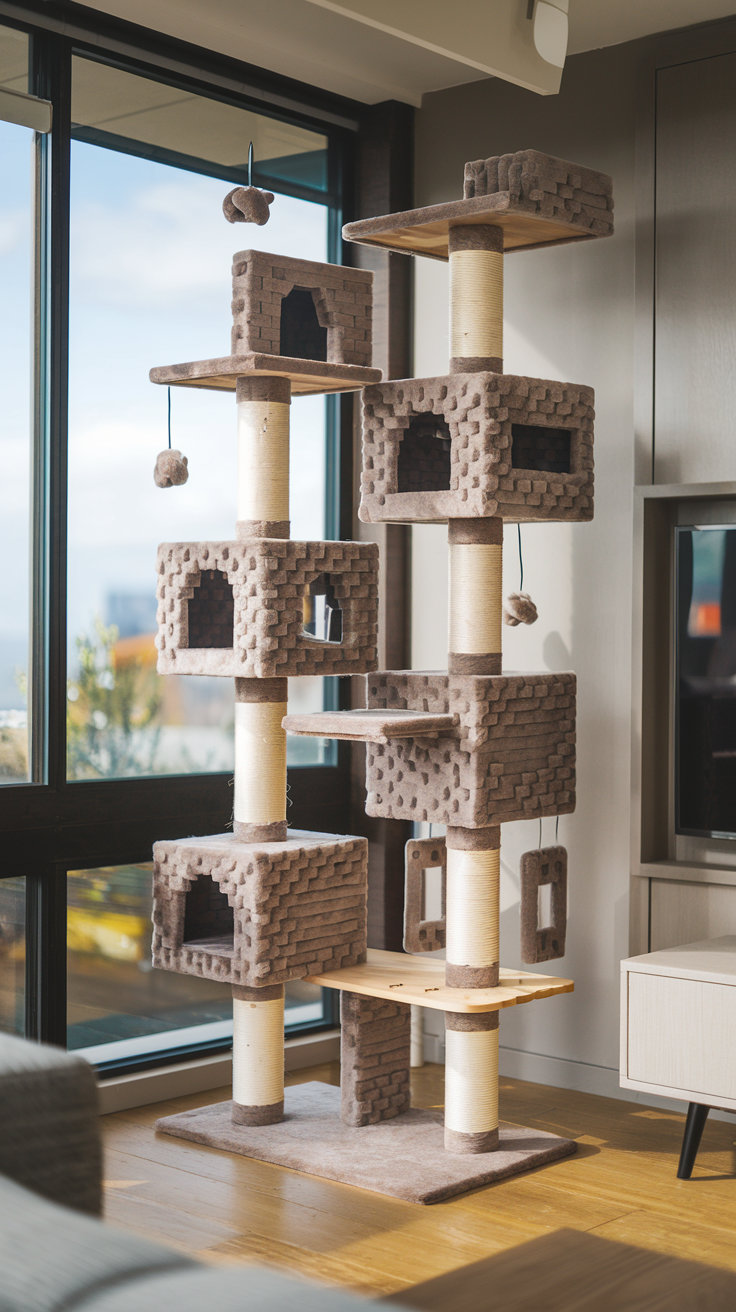
Building a cat tree in Minecraft needs careful planning and the right blocks. I'll show you how to create a perfect climbing spot for your virtual cats with simple steps that work in all game versions.
How Do I Choose the Best Location for the Cat Tree?
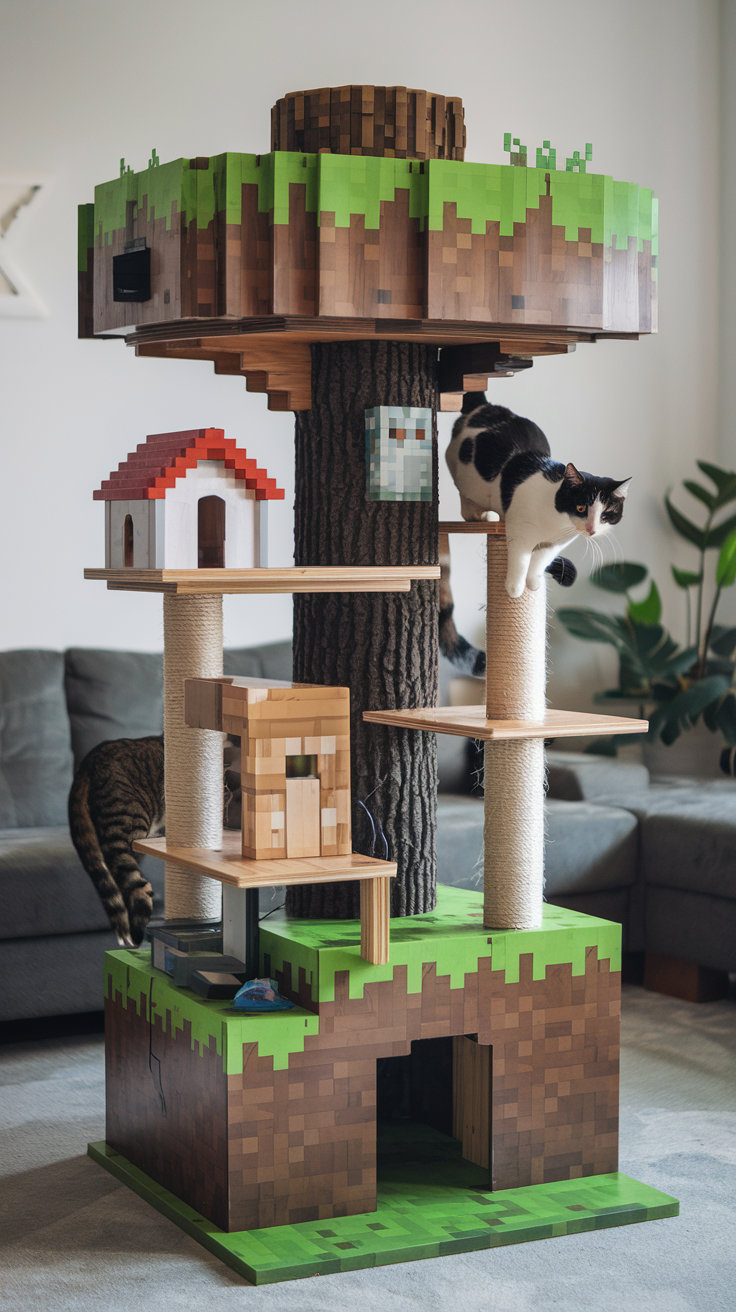
I place my cat trees in spots with lots of natural light and a clear view of the surroundings in Minecraft. The perfect spot sits near windows or glass blocks, giving cats a sunny perch to watch the virtual world go by.
My favorite locations include corners of living rooms or next to staircases, which saves space while making the cat tree a focal point.
A cat's favorite spot is always where they can see everything while staying cozy and safe.
The height of your building area needs at least 4-5 blocks of vertical space for a basic tree design. I pick areas away from water sources or lava pools to keep the cats safe. A flat surface works best as the foundation, though I sometimes build on raised platforms for extra height.
Now, let's explore how to create a stable base structure that will support your cat tree design.
How Do I Create a Stable Base Structure?
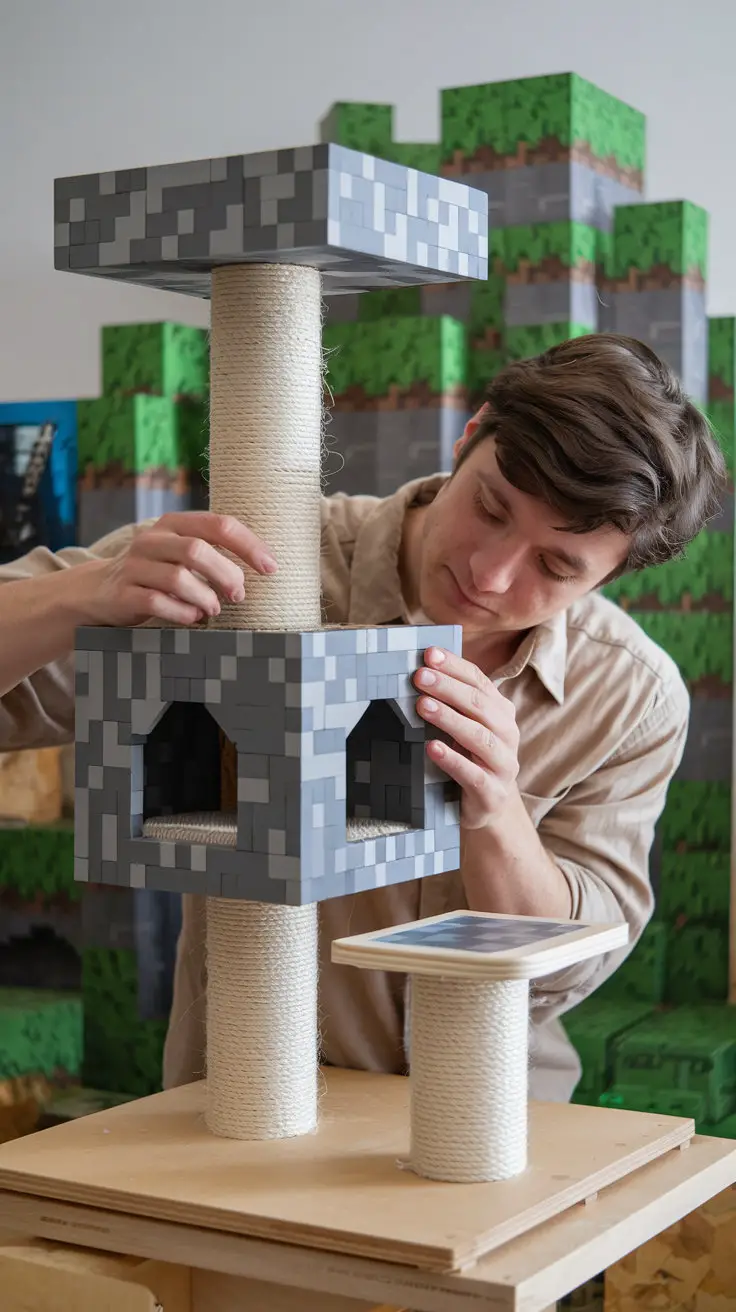
Building a solid base for your Minecraft cat tree starts with a 3×3 square of cobblestone blocks. My favorite trick is to stack these blocks two layers high to create a sturdy foundation that won't topple over during gameplay.
The base needs extra support, so placing fence posts at each corner gives the structure more stability while adding a decorative touch.
The next layer calls for wooden planks or stone slabs to form a smooth platform. A mix of oak and spruce wood blocks creates nice color contrast for the base area. The platform should extend one block out from the foundation on all sides, giving cats enough room to move around freely.
This design works great in both survival and creative modes, making it perfect for any Minecraft version.
How Can I Add Platforms for Cats to Rest On?
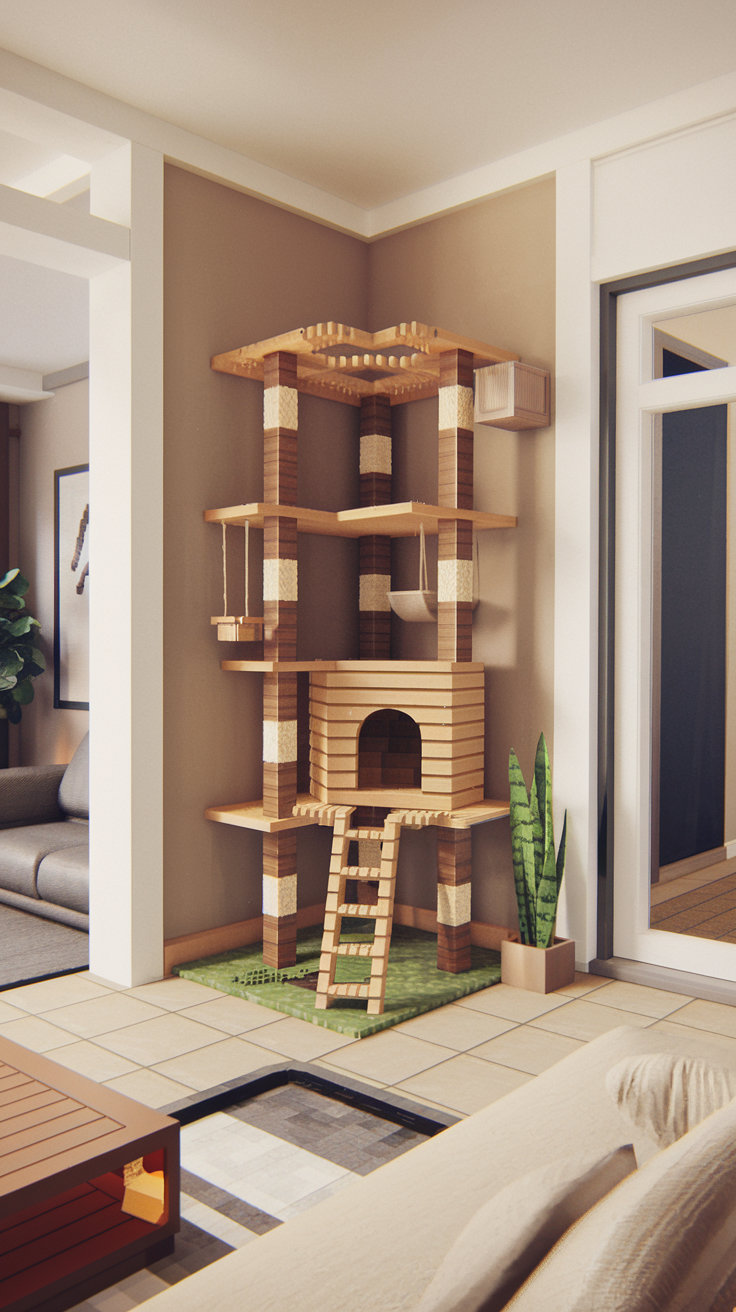
Now that I've set up a solid base, I'll focus on creating comfy platforms for my Minecraft cats to lounge on. My favorite method starts with placing wooden slabs or full blocks in a step-like pattern up the tree structure.
Each platform needs at least a 2×2 block space to give cats enough room to sit and move around.
I love mixing different block types to make the platforms more interesting. Wool blocks work great as cushions, while carpet adds a soft touch to wooden surfaces. The trick lies in spacing these platforms about 2-3 blocks apart vertically.
This setup lets cats jump easily between levels without getting stuck. I always add small edges or fences around each platform to stop my virtual pets from falling off, just like real-world cat trees.
For extra style points, I place some wooden stairs upside down under the platforms to create a fancy support look.
What Are the Best Ways to Add Ladders or Scaffolding?
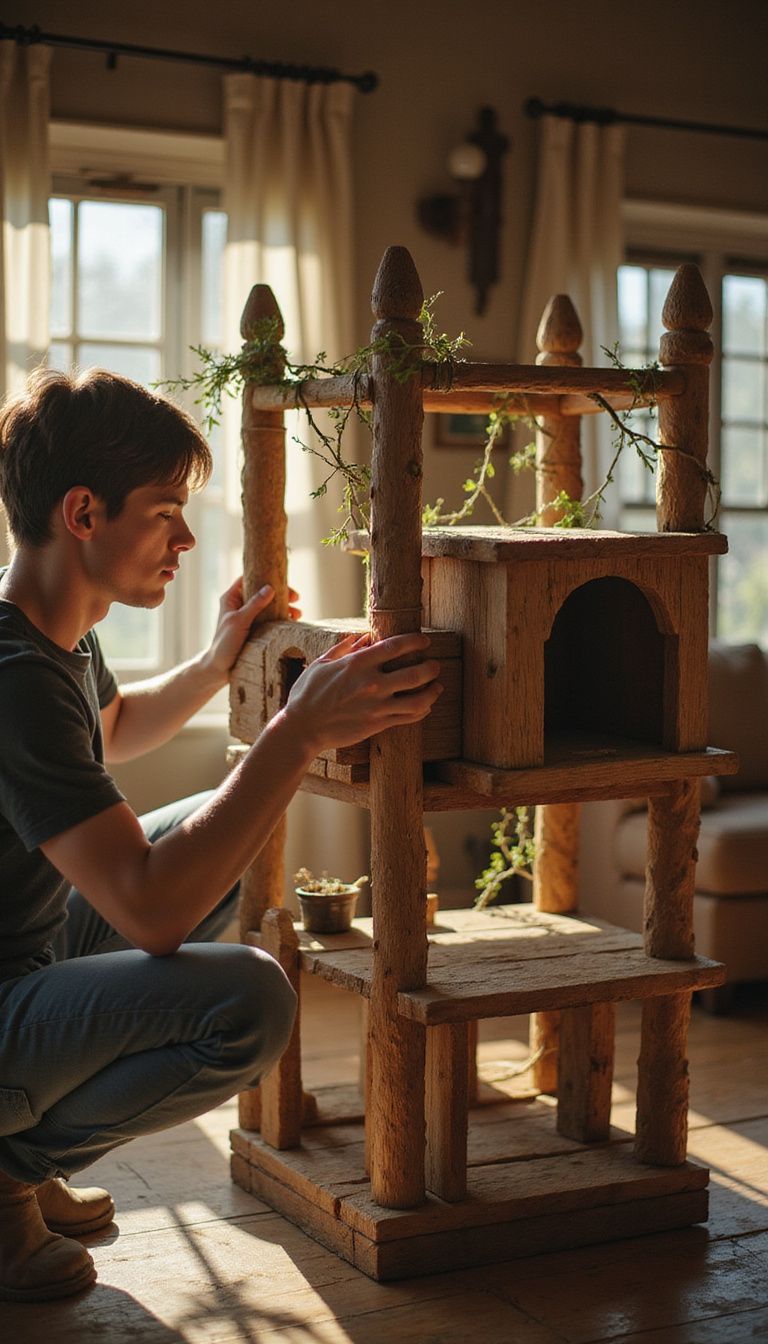
I love using ladders and scaffolding to create perfect climbing spots for Minecraft cats. My favorite method combines oak fence posts with trapdoors to make natural-looking climbing paths.
The fence posts work great as vertical supports, while trapdoors create small platforms cats can jump between. This setup matches most cat tree designs and gives cats plenty of spots to perch.
The key lies in spacing the climbing elements just right. Each ladder section needs a 2-block gap from the next one, letting cats jump easily between levels. Wooden trapdoors add style and function as mini-platforms along the climbing route.
For extra flair, I mix in some vines or string to create rope-like details that make the cat tree look more realistic. The next step focuses on adding decorative touches to make your cat tree stand out.
How Can I Add Decorative Elements to Improve Appearance?
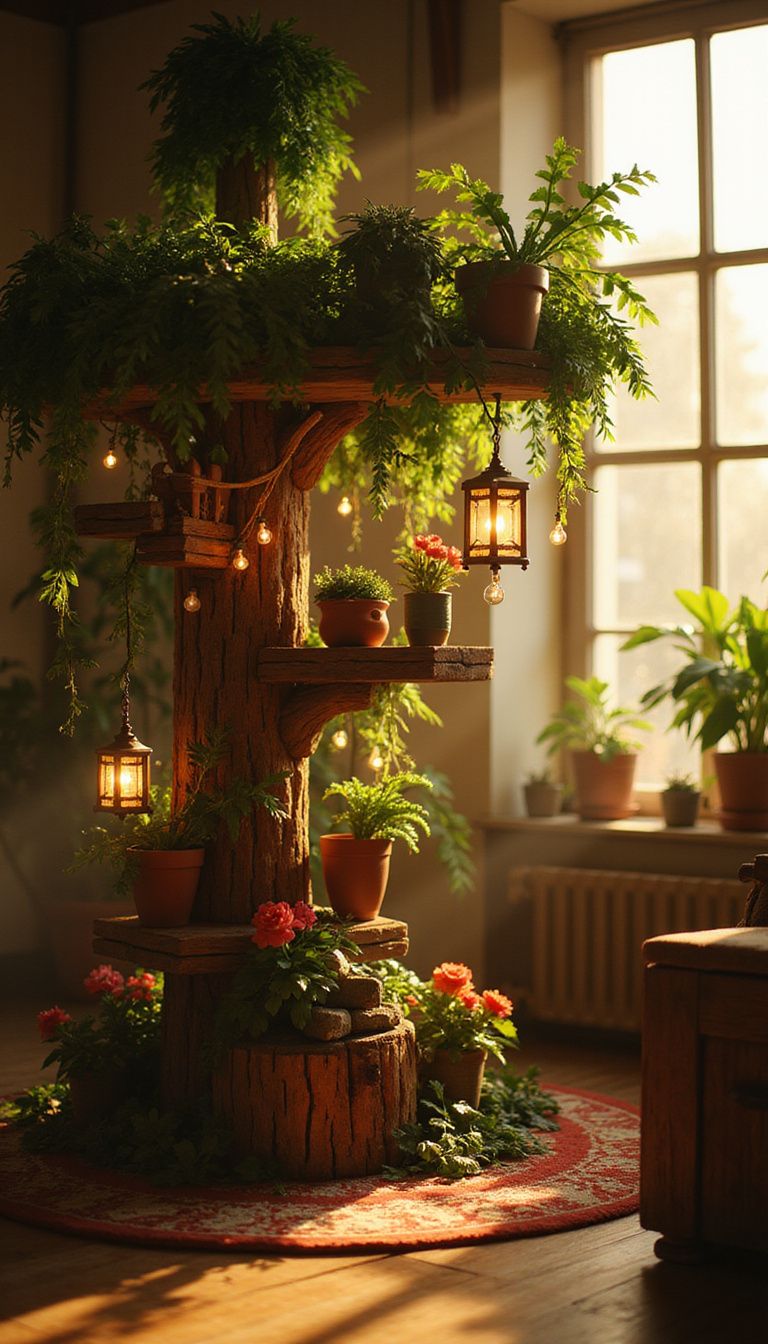
My cat tree needs some eye-catching details to make it stand out. Simple items like lanterns, flower pots, and carpet blocks add color and style to each platform. Placing leaves or vines around the edges creates a natural, cozy look that cats love to explore.
Small touches like fence posts or trapdoors can serve as perfect spots for cats to perch.
The best decorations mix function with style in Minecraft builds. Glass panes make great windows for enclosed platforms, while stairs and slabs create comfy spots for cats to sit. Banners hung on the sides add a pop of color, and string lights (made from glowstone or sea lanterns) brighten up the whole structure.
My favorite trick involves placing wooden buttons on the sides to look like scratch posts, making the cat tree feel more realistic.
How Do I Make Sure the Cat Tree Is Usable for Cats in Minecraft?
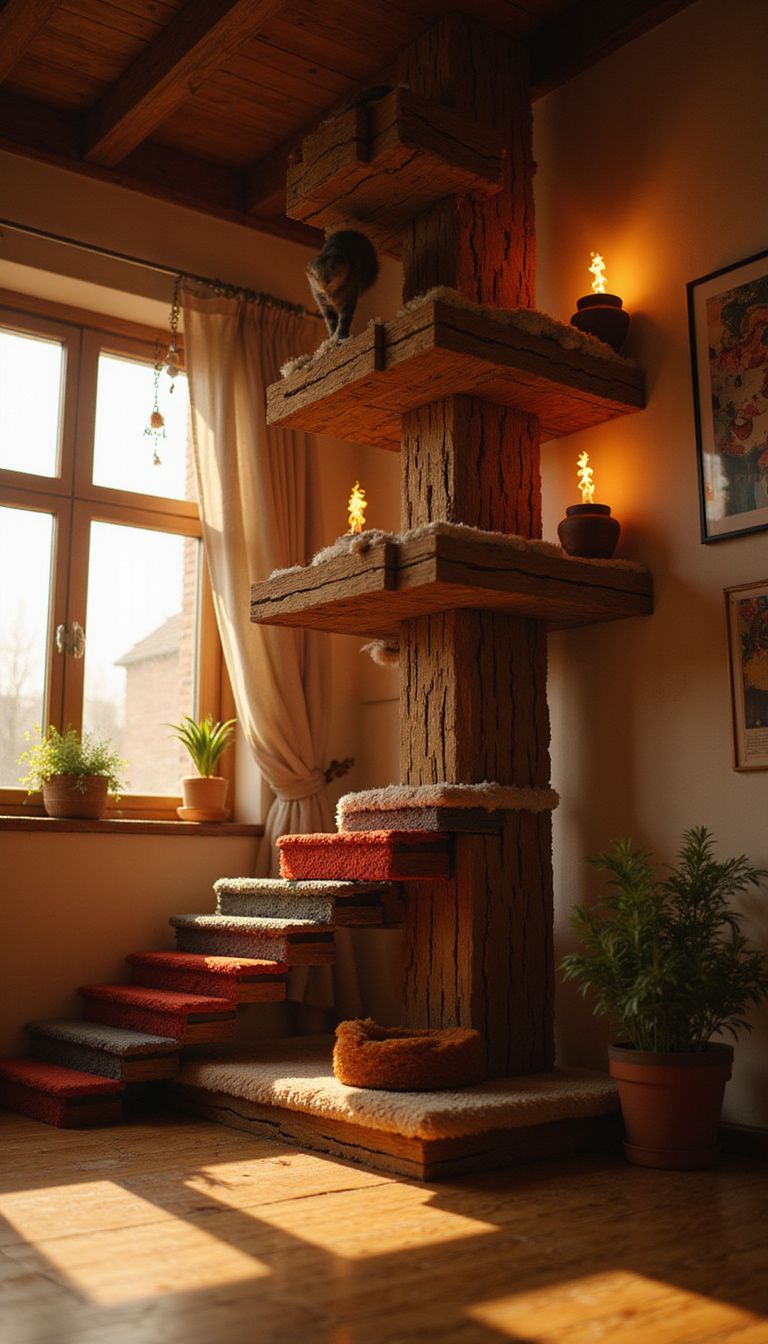
I test the cat tree's usability by placing a tamed cat nearby and watching its behavior. Minecraft cats need clear paths to jump between platforms, so I space each level about 2-3 blocks apart.
The platforms must be at least 2×2 blocks wide to give cats enough room to sit and move around comfortably. Carpet blocks on each platform make perfect resting spots that attract cats naturally.
The structure stays functional with proper lighting from torches or lanterns to keep hostile mobs away at night. I add fence posts or stairs between levels to create easy climbing paths for the cats.
A mix of wool blocks and wooden planks gives cats different textures to interact with while keeping the build stable. Next, I'll show you some creative ways to customize your cat tree's appearance with unique themes and designs.
Tips for Customizing Your Cat Tree
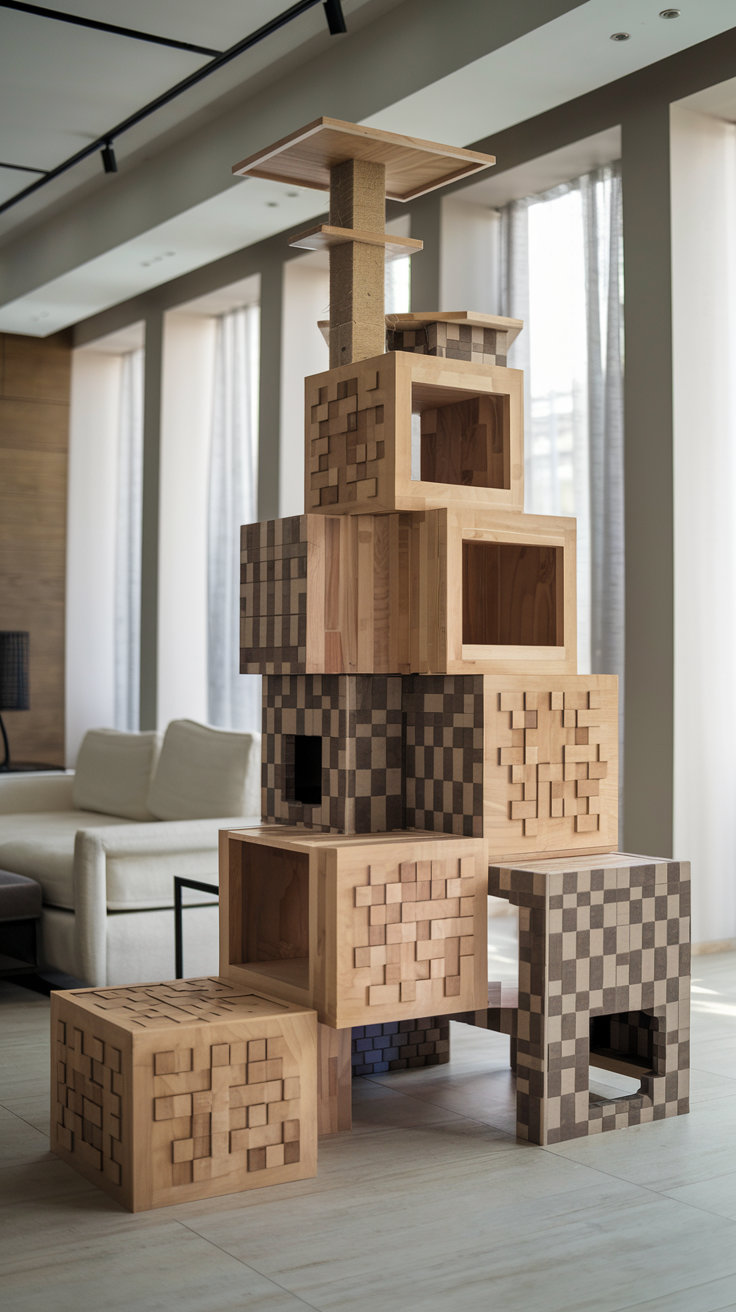
Your cat tree can shine with personal touches that match your Minecraft world's style. I'll show you cool tricks to make your cat tree stand out, from picking the right blocks to adding fun spots for your virtual pets to play.
How Can I Incorporate Unique Designs or Themes?
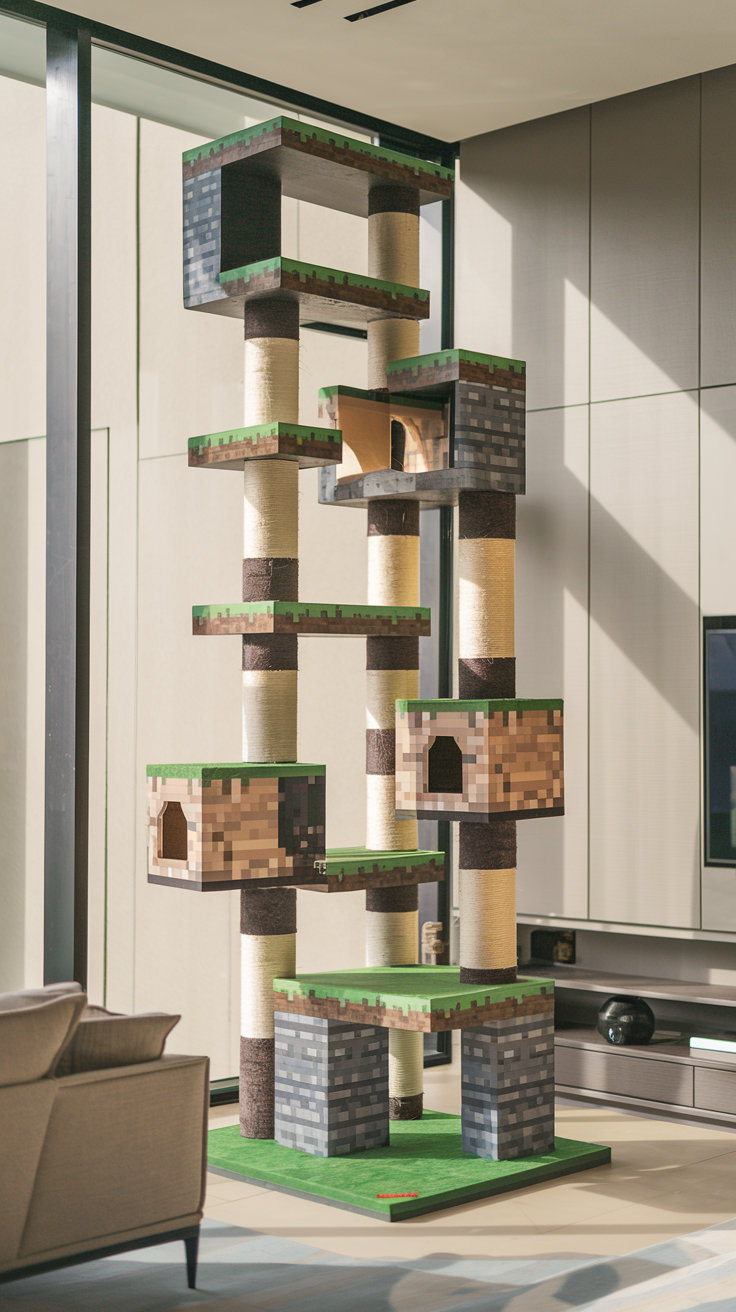
I love making my Minecraft cat trees stand out with cool themes. My favorite design turns the cat tree into a magical forest using dark oak wood blocks for the trunk and leaf blocks for the canopy.
Adding glowstone or sea lanterns creates a soft glow that makes the whole structure pop at night. The platforms can match different biomes, like desert-themed levels with sandstone and cacti or ocean-themed spots with prismarine and coral blocks.
Simple touches make the cat tree more fun and special. Placing flower pots on each level brings color, while fence posts create natural-looking branches. I mix wooden trapdoors as decorative elements around the edges of platforms.
Small water features from running water blocks create a peaceful mood. The best part is picking blocks that match the house or building style nearby, making the cat tree fit right in with other structures.
How Should I Adjust the Size Based on Space?
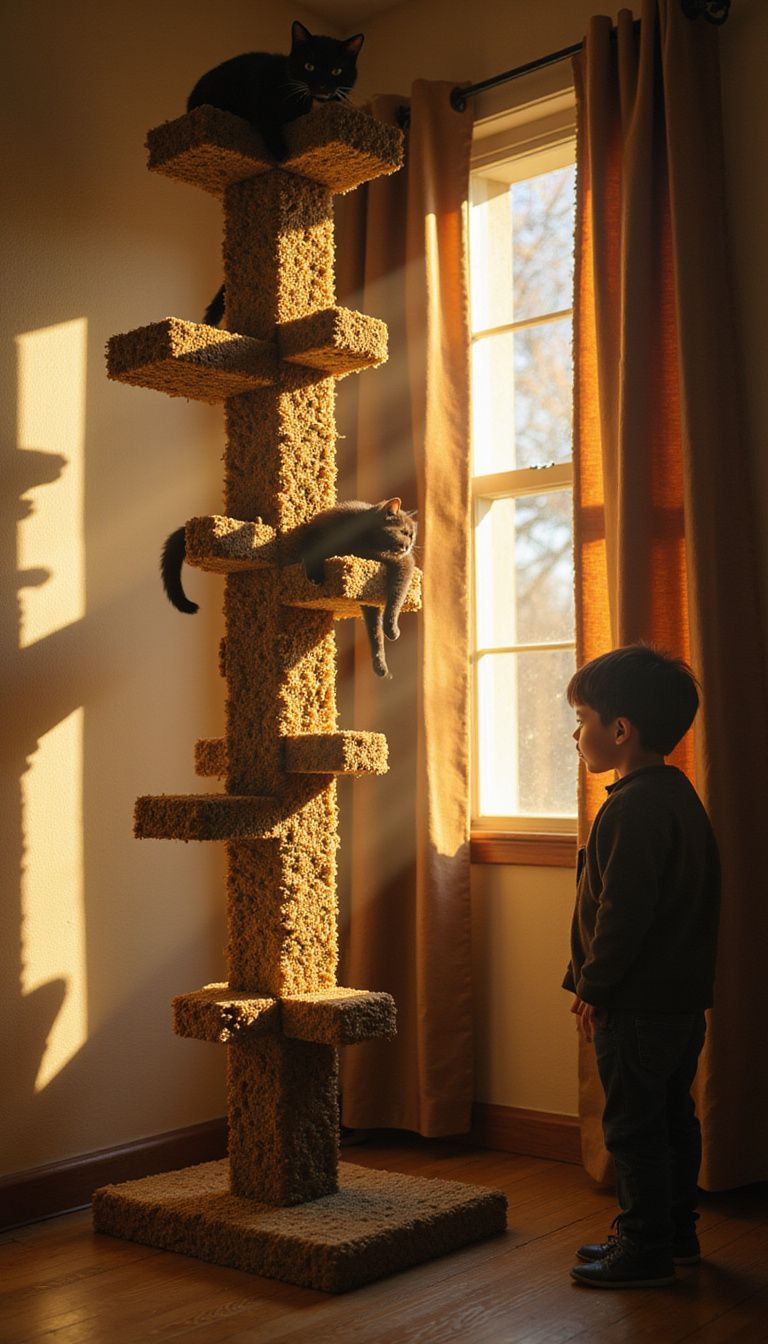
After picking your favorite design theme, let's talk about making your cat tree fit perfectly in your Minecraft space. My best tip for building cat trees focuses on the room size you have available.
A small room needs a tall, narrow design that goes up rather than out, while bigger spaces can handle wider platforms and multiple climbing paths.
The basic rule stays simple: leave three blocks of space between your cat tree and other structures in the game. This spacing lets Minecraft cats move freely and jump between platforms.
A compact 3×3 base works great for tight spots, while open areas can support a 5×5 or larger foundation. The height should match your room, with at least two blocks of air space above the highest platform for cats to sit comfortably.
Conclusion

Building a cat tree in Minecraft opens up endless fun for virtual pets. My step-by-step guide makes this project simple and rewarding for players of all skill levels. The basic materials, creative design choices, and proper placement create the perfect hangout spot for Minecraft cats.
This custom build adds charm to any virtual home while giving cats a cozy space to rest and play. Go ahead and start crafting your own cat tree today, your feline friends will thank you with plenty of purrs and cuddles.




Leave a Reply